Difference Between “Has” and “Have”
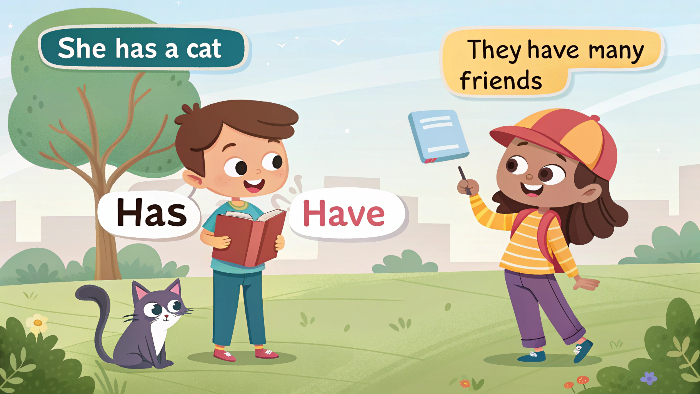
Many English learners get confused between “has” and “have.” Both words come from the verb “to have,” which means to own, possess, or experience something. The difference depends on who (the subject) is doing the action.
Let’s make it super simple 👇
Difference Between “Has” and “Have”
🧩 Basic Rule
| Subject | Verb | Example |
|---|---|---|
| I / You / We / They | have | I have a new phone. |
| He / She / It | has | She has a beautiful smile. |
👉 Use “have” with I, you, we, they
👉 Use “has” with he, she, it
🧠 Examples in Sentences
Using “have”
- I have two brothers.
- You have many friends.
- They have a big house.
Using “has”
- He has a car.
- She has an English class today.
- It has four legs. (referring to an animal)
⏳ “Has” and “Have” in the Present Perfect Tense
| Structure | Example |
|---|---|
| have + past participle | I have eaten breakfast. |
| has + past participle | She has finished her homework. |
🟢 Tip: Both “has” and “have” can be used with past participles to talk about actions that happened recently or have a connection to the present.
🚫 Common Mistakes to Avoid
| ❌ Wrong | ✅ Correct | Explanation |
|---|---|---|
| She have a dog. | She has a dog. | “She” takes has. |
| They has a new car. | They have a new car. | “They” takes have. |
| He have gone home. | He has gone home. | Present perfect with “has” for he/she/it. |
💡 Grammar Tip
If the subject is singular (he, she, it) → use has
If the subject is plural (I, you, we, they) → use have
🧍 Example:
- My friend has a job.
- My friends have jobs.
💰 Smart Grammar Tools (High CPC Section)
Want to practice “has” and “have” like a pro? Try using online grammar tools that help you check your writing instantly!
Some popular ones include:
- Grammarly – helps fix grammar mistakes automatically.
- QuillBot – rephrases and improves your sentences.
- Linguix – checks for style and vocabulary errors.
💡 Keywords: best English grammar app, grammar checker online, improve English writing, learn English grammar free.
These are useful for your English—and advertisers love them!
✅ Final Review
| Subject | Verb | Example |
|---|---|---|
| I / You / We / They | have | We have a meeting. |
| He / She / It | has | It has a problem. |
🎯 Conclusion
The difference between “has” and “have” is all about the subject of the sentence.
Keep practicing with short sentences every day. The more you use them, the more natural your English will sound!